What’s the Right Fertilizer for Your Garden: Organic vs Synthetic
ORIGINALLY FROM MARCH 2021, UPDATED APRIL 2026
Spring has arrived! That means it's time to start fertilizing your plant. However, if you’re living with a blanket of snow covering your garden, then you have to wait until the weather warms up to start. But if the weather is good, you might be deciding between two options when it comes to fertilizer. Do you choose to feed organic or synthetic? It’s a common question for gardeners, so let’s dig into what I recommend for the health and longevity of your garden.
The Best Fertilizer for Your Plants: Organic vs Synthetic
When it comes to feeding your plants, which type of fertilizer is better: organic or synthetic? Let me break it down for you.
Organic
Organic fertilizers come from renewable resources and/or are byproducts of other organic materials. When you feed your plants with organics, you’re actually feeding the microbiology in the soil. This then works with the root system of the plant to provide it with the nutrients it needs when it needs them. When you feed organic, you can (in some cases) feed less often since the plant enjoys the nutrients at a natural, slower rate. This means you’re not fertilizing as often and you’re using less product throughout the year, which helps reduce costs.
Other benefits of organic fertilizers are that they don’t contaminate the groundwater or local waterways and they won't burn your plants. Synthetics can do both, especially if applied too heavily. Let’s dig into this type of fertilizer a bit more.
Synthetic
Synthetic fertilizers are manufactured products extracted by a chemical industrial process. When you feed your plants with synthetic, you’re only feeding the plant and not the soil it’s growing in. This means that you need to feed as often as indicated on the package. Why? Because the plant is somewhat dependent on the fertilizer to thrive.
Synthetic fertilizers also act as a steroid for the plant, stimulating new growth. Sounds amazing, right? Not quite. This makes them more prone to pests and diseases. Plus, since you need to feed according to the label – every 4 to 6 weeks – you use more and spend more on fertilizer over time.
Lastly, synthetic fertilizers can be high in salts. This is extremely detrimental to the soil and your plants over time. This is especially a problem for gardeners who water their plants frequently and shallowly because the salts then build up over time within the top layer of soil. You don’t want that, which is why I recommend feeding with organic vs synthetic fertilizers.
Why I Opt for Organic Fertilizer
My choice for my own plants, as well as my clients, is to feed with organic fertilizers. This is the best choice for the optimum health of your garden. Plus, it’s the most sustainable way to grow a healthy ecosystem since you’re feeding the microbiology of your garden, not just your plants. By opting for an organic fertilizer, you also avoid the toxic chemicals in synthetics that can harm the beneficial microbiology in your garden.
When you feed plants and nurture the soil with organic fertilizers, it:
Is the most sustainable way to feed your plants
Feeds soil microbes and increases soil health
Allows your plants to access nutrients on an “as needed” basis, more slowly
Prevents growth spurts that can attract pests
Now that you know why to choose organic, let’s dig into how to determine what fertilizer is organic vs synthetic.
How to Identify and Use Organic Fertilizers
The easiest way to identify organic fertilizers is to look for the OMRI, CDFA (if you live in California), or other organic certification logos on the package. These fertilizers will also have lower N-P-K (nitrogen-phosphorus-potassium) numbers.
There are many types of organics to choose from, but there are three in particular that I find myself opting for again and again.
1. Granular fertilizer
Granular fertilizer is a common choice for organic gardening. It’s easy to mix into the soil and releases nutrients over time. I add granular fertilizer to the hole when I plant so that the fertilizer is in contact with the root zone as my plants grow. I feed my established trees, shrubs, and perennials that require fertilizer – once or twice a year – by lightly scratching it into the top couple of inches of soil around the drip line of the plant.
2. Liquid fertilizer
For my annual food crops, roses, dahlias, and other flowering beauties, I mix up a batch of liquid fertilizer in my watering can to apply as a soil drench once a month or so. I do this in addition to the granular fertilizer I apply at the time of planting and seasonal additions. I love feeding with a good quality liquid fertilizer that’s a combination of fish and kelp for my food crops and a good quality liquid bloom formula for my flowers.
3. Worm casting
Worm casting is simply worm waste. It is a superfood for your plants and soil. It has important enzymes, beneficial bacteria, and an abundance of essential nutrients and minerals. Earthworms are a wonderful addition to your garden’s ecosystem and an essential tool for organic gardening.
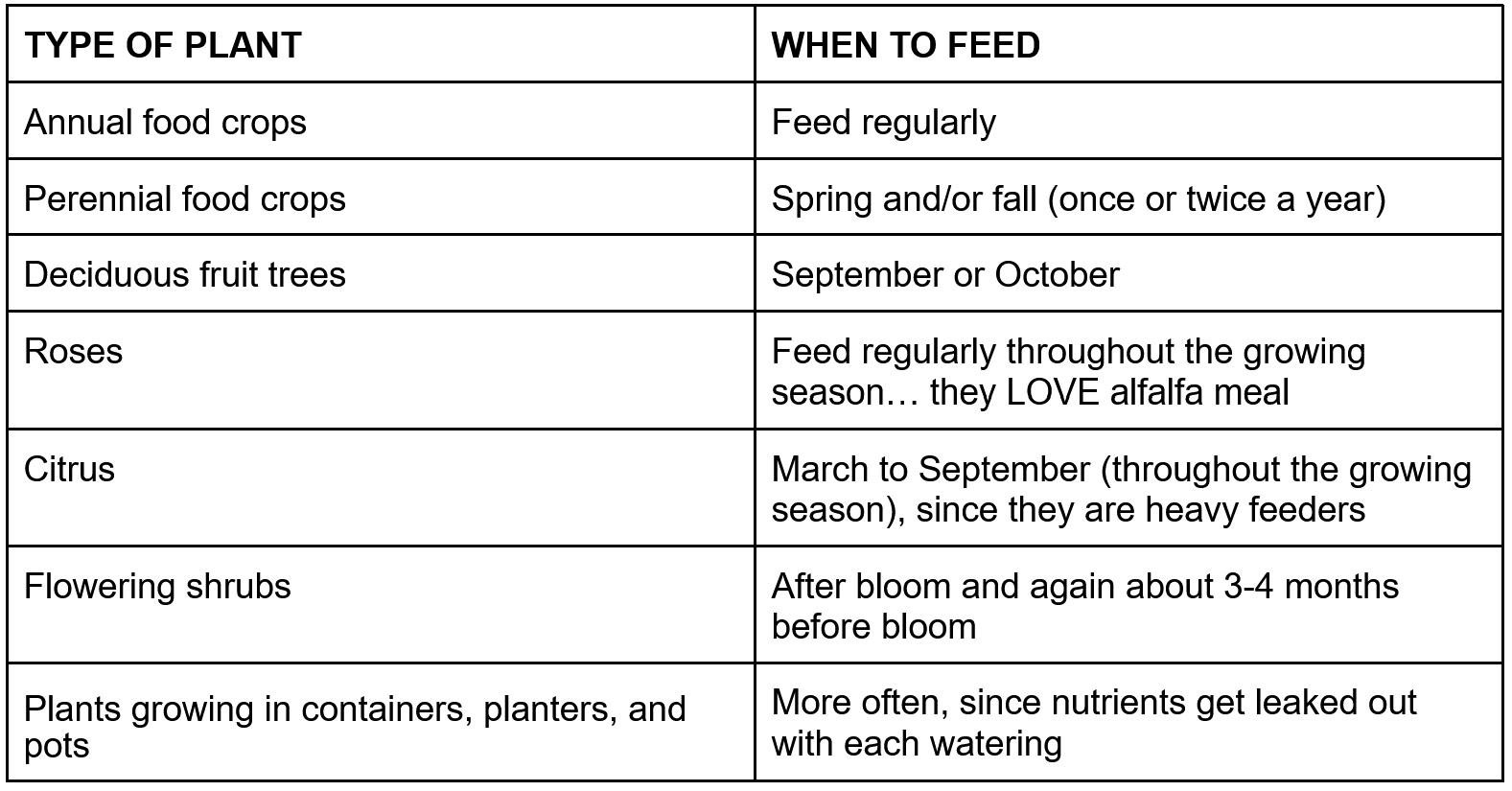
The right time to fertilize depends on the type of plant and whether it’s in-ground or in a container. Here’s a handy table to reference.
Ways to Grow Together
Now it’s easy to see why feeding your plants with organic fertilizer is a win-win. The goal is always to have fun in your garden and remember to opt for organic when you can!
Want to learn more about growing a thriving garden without the use of pesticides? Dig into these blogs: